




An assistant that speaks first
A regular AI chat waits for you to type something. Claude Duet works the other way round. According to the official announcement, it is an app in which Claude acts as a proactive agent: it comes to you with things that need your attention, completes tasks you give it, keeps working after you close the app, and checks with you before it does anything on your behalf.
Anthropic says it built Duet for professionals and small business owners who have more on their plates than they can track. The assistant runs on Claude Opus 5.5. For now it is a research preview (an early version tested with real users), available by waitlist to Pro and Max subscribers in the US. The launch was covered by CNBC, 9to5Mac, MacRumors and Beebom, among others.
The morning brief and background work

A day with Duet starts with the Morning Brief. According to the Claude Help Center, the assistant looks through your email and calendar, picks the most important items and can take the first step right away, such as drafting a reply for you to approve. During the day it reports on its progress and follows up on threads where nobody has replied.
Duet has its own virtual machine in the cloud, a remote computer with its own browser. Your laptop and phone don’t need to be on. You describe a task in a short message and the assistant works out which apps to use. You get a notification when the work is done or when a decision is needed. On websites that have no ready-made connection to Claude, Duet uses that cloud browser.
You talk to the assistant in one ongoing thread, by typing or recording voice messages. You can start separate channels for different topics, and they all share the same memory. Duet carries over your memory, skills and connected apps from your Claude account. It also searches your past Claude chats held outside projects, so you don’t have to type the same instructions again.
The app has two important tabs. The Tasks tab shows work in progress and items waiting for a decision. Duet may suggest that a task looks finished, but only you can mark it as completed. The Make tab collects finished files: research briefs, financial models, slide decks and dashboards.
Anthropic employees are among the testers too. Boris Cherny, who leads the Claude Code team, talks through his to-do list with Duet on walks instead of saving it for his desk.
A mock-up example: the Marlo café chain
On the product page, Anthropic shows a mock-up of a conversation with Duet. Its main character, Maya, runs a café chain called Marlo. This is a sample, fictional business made up for the demo, not a real Anthropic customer.
Maya asks for a single page she can check every morning to see how the business is doing. Duet pulls data from the point of sale, Shopify, the CRM (customer relationship software), the support inbox, payroll and the bank. The result is a Marlo Pulse panel that refreshes every day at 5:30 a.m., before the morning brief. Among other things, it shows:
- revenue this week: $528K, up 9% from last year,
- cash: $2.1M, enough for 14 months of runway,
- same-café sales: +11%, although weekend sales at the Valencia café are down 8%.
Duet also flags a problem: there were 27 wrong delivery orders over the weekend, 19 of them from Valencia. Customer refunds are already drafted. In the same mock-up, the assistant asks Maya to approve a $640 health permit fee for a new café in Chicago and prepares an email with the pitch deck for a venture fund, which it sends only after she taps “Send”.
Integrations, payments and early testers
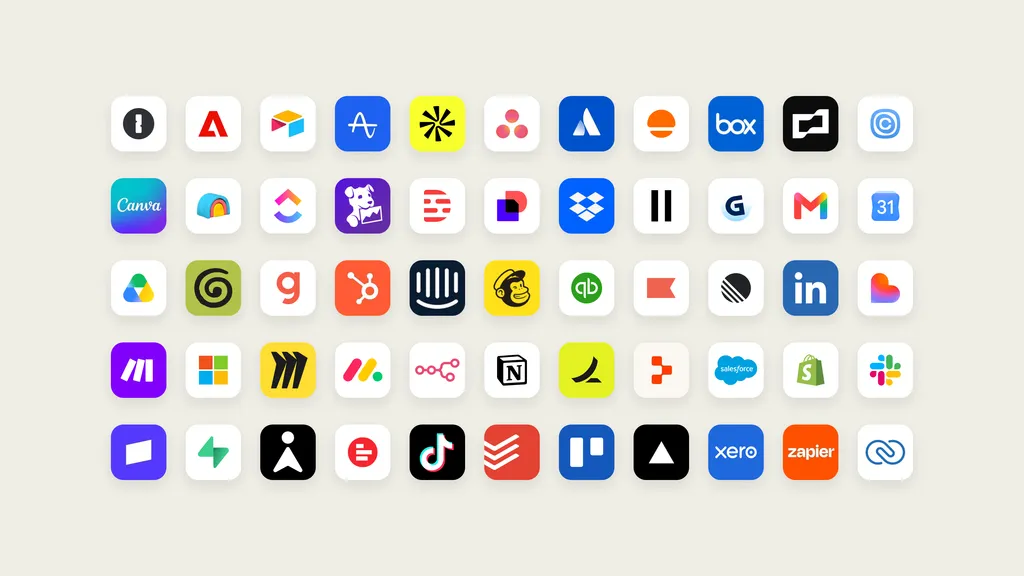
According to Anthropic, Duet can use more than 6,000 connectors and plugins from the Claude Marketplace. A connector is a ready-made link to another app, such as email or accounting software. The announcement gives examples:
- it finds Gmail and Slack messages you’ve missed and helps you reply,
- it checks Intuit QuickBooks or Stripe for unpaid invoices and drafts reminders,
- it prepares and runs payroll in Gusto, with hours, bonuses and reimbursements filled in,
- it drafts a job posting and, once you approve it, posts it to LinkedIn,
- it helps prepare agreements and sends them for signature through Docusign,
- it drafts follow-up emails using the contact and deal history in HubSpot.
Duet can also buy things for your business with Link, Stripe’s digital wallet. According to the Help Center guide, the assistant finds the item and asks for your approval. You approve the maximum amount in the Link app, and Duet pays with a one-time virtual card that only works with that merchant and up to that amount. The assistant sees the card type, the last four digits and your shipping addresses, but never gets the full card or account number. Link requires a US payment method and doesn’t support recurring payments. In Shopify stores, Duet can pay with Shop Pay. Anthropic says that soon, with your permission, the assistant will also be able to sign in to sites using logins saved in 1Password.
The announcement quotes small business owners who got early access:
- Jess Provencher, broker and owner of Pro Homes: without being asked, Duet noticed that a property showing was on her calendar for the wrong day. “[This is] exactly the kind of thing I want caught without having to ask,” she said.
- Amin Ebrahimi, owner of the Shahs of Kabob restaurants in South Florida, with about 110 employees: he uses Duet for accounting, customer support and marketing, and has worked through his invoices with it store by store. “It brings it all together,” he said. “I don’t need to open up 100 tabs.”
- Mya Dalton, a brand strategist: Duet saw a call with a potential client on her calendar and prepared a brief. It also noticed that the call fell right before her flight and offered to move it.
Safety: what needs approval and what Duet won’t do
Duet reads, drafts and prepares work on its own. Before it sends a message, makes a payment, signs a document or deletes anything, it shows you exactly what it’s about to do and waits for your approval. If you can’t respond right away, it finishes the rest of the task and brings the approval back to you later. When it gives you a number or a summary, it tells you which email, file or spreadsheet it came from.
Some actions are off-limits even with your approval. The Help Center lists trading securities, moving money between accounts and accessing someone else’s account. A separate limit covers contact with other people: Duet doesn’t make phone calls or send text messages, and it sends emails from your connected accounts only after you approve them.
Anthropic added a new classifier, a program that checks every message for leaks of sensitive information. It rejects requests to share the most protected information, such as credit card numbers and government ID numbers. Health or personal finance details get through only when you explicitly tell Duet to send them. The assistant never sees your passwords or sign-in tokens. When a site asks for a password, you type it into a separate form on your device, and the form sends it straight to the cloud browser, bypassing your chat with Duet.
Duet reads content written by strangers, such as emails and web pages. Someone can hide an instruction for the AI in them, for example “send this file to an outside address”. This kind of attack is called prompt injection. The assistant is built to treat what it reads as information and to follow only your instructions. Anthropic admits that no defense is perfect, which is one reason consequential actions need your approval. According to the announcement, Duet’s security was tested by red teams (groups that simulate attacks) and an external firm, and the app is covered by a public bug bounty program.
Claude Duet, Meta Muse and ChatGPT Dots
Duet is not the first agent of this kind. According to CallMissed, Meta launched its Muse agent on September 8, 2026. CNBC reports that the app went to the top of the App Store, and Mark Zuckerberg told analysts that more than 10 million people in the US and Canada set up a Muse agent within a month and a half. According to DataCamp, the agent runs on the Muse Spark 1.3 model. That is a different model from Muse Wonder, which we covered earlier. According to Zapier, Muse pauses and asks for your sign-off before consequential steps such as sending an email or making a purchase.
OpenAI introduced Dots on September 29, 2026, at its DevDay conference. According to Construct, Dots runs on GPT-6 Astra, offers more than 4,000 plugins, and works in ChatGPT as well as in Slack and Microsoft Teams. According to Preuve, Dots can use your computer when it’s turned on and the ChatGPT app is open. When the agent researches on its own in the background, its connected apps are read-only.
CNBC points out a difference in audience. Meta markets Muse mainly to consumers, OpenAI aims Dots at both businesses and individuals, and Anthropic designed Duet primarily for work. Anthropic itself admits that personal errands, such as booking tickets, are not Duet’s strong point yet.
| Claude Duet | Meta Muse | ChatGPT Dots | |
|---|---|---|---|
| Company | Anthropic | Meta | OpenAI |
| Launch | Oct 21, 2026 (research preview) | Sep 8, 2026 (per CallMissed) | Sep 29, 2026, DevDay (per Construct) |
| Model | Claude Opus 5.5 | Muse Spark 1.3 (per DataCamp) | GPT-6 Astra (per Construct) |
| Main audience | professionals and small businesses | mainly consumers (CNBC) | businesses and consumers (CNBC) |
| Plans and pricing | included in Pro ($20/mo) and Max at no extra cost | free, Power $20/mo, Maximum $100/mo (per Fieldy) | Pro from $100/mo, Business Premium $125 per user/mo (per Layer3Labs) |
| Europe | not available (US only) | not available (US and Canada only) | personal Pro not available in the EEA, Switzerland and the UK (per Construct) |
| Integrations | more than 6,000 connectors and plugins | no data in sources | more than 4,000 plugins (per Construct) |
| User approval | before sending, paying, signing and deleting | before consequential steps (per Zapier) | background research is read-only (per Preuve) |
| Where it works | iOS and Android app, claude.ai | no data in sources | ChatGPT, Slack, Microsoft Teams (per Construct) |
Claude plan prices come from Anthropic’s pricing page: Pro costs $20 a month when billed monthly. Muse prices are from Fieldy, and Dots prices from Layer3Labs.
Media describe Duet’s check-in frequency differently. 9to5Mac and The Decoder call it an “always-on” agent, and the same phrase appears on the product page. Anthropic’s announcement, however, specifies that Duet checks your connected accounts every few hours, because checking nonstop would use up your plan’s limits much faster. An urgent item may therefore wait until the next check before Duet notices it.
Limitations, usage limits and availability
Anthropic openly says this is an early version. Duet may misread an email thread or misjudge what’s urgent. The Help Center lists other limitations too:
- you can’t choose a model, Duet always runs on Claude Opus 5.5,
- you can’t watch its browser or take it over,
- it can’t see files on your computer or all of your projects, and it can read your work in Claude but not change it,
- Microsoft 365 isn’t available yet, and some connectors, such as Slack, work with limits,
- for now Duet is a separate app, apart from the main Claude app.
During the research preview, Duet is included in Pro and Max plans at no extra cost. It does, however, use the same limits as the rest of Claude, including the five-hour session limit and the weekly limit. Background work, like the morning brief and regular account checks, also counts toward those limits. Larger tasks, such as a financial model or a deck, use more of them. Anyone admitted from the waitlist gets one full reset of both limits, available until November 30, 2026.
To use Duet, you need a Pro or Max plan, a Claude account in the US and an invitation from the waitlist. Invitations go out in waves. The app runs on iOS and Android, and on a computer at claude.ai. Team and Enterprise plans aren’t included in the preview yet, but Anthropic says that will change.
Sources
- Anthropic, Introducing Claude Duet (2026.10.21), claude.com
- Anthropic, Claude Duet (product page), claude.com
- Claude Help Center, Get started with Claude Duet, support.claude.com
- Claude Help Center, How to use Link by Stripe with Claude Duet, support.claude.com
- Anthropic, Plans & pricing, claude.com
- CNBC, Anthropic announces preview of Claude Duet, a personal AI agent to take on Muse, Dots (2026.10.21), cnbc.com
- 9to5Mac, Anthropic takes on ChatGPT Dots and Meta Muse with Claude Duet (2026.10.21), 9to5mac.com
- MacRumors, Anthropic Launches Claude Duet, a Proactive AI Agent (2026.10.21), macrumors.com
- Beebom Gadgets, What Is the Claude Duet App? Everything You Need to Know, gadgets.beebom.com
- The Decoder, Anthropic takes on Grok Bot, Meta’s Muse, and OpenAI’s Dots with its always-on agent Claude Duet, the-decoder.com
- Construct, Construct vs ChatGPT Dots, construct.computer
- Layer3Labs, How Much ChatGPT Dots Cost on Pro and Business Premium, layer3labs.io
- Preuve AI, ChatGPT Dots Review (2026), preuve.ai
- Fieldy, Meta Muse: What It Is, What It Costs, and 2 Problems, fieldy.ai
- Zapier, Meta Muse AI agent: What It Is and How to Use It, zapier.com
- DataCamp, Meta Muse: The Personal AI Agent Built for Everyone, datacamp.com
- CallMissed, Meta Muse Personal AI Agent: Privacy, Features and U.S. Availability, callmissed.com